
Web Data Infrastructure for AI: Handling Dynamic, Protected and Changing Websites
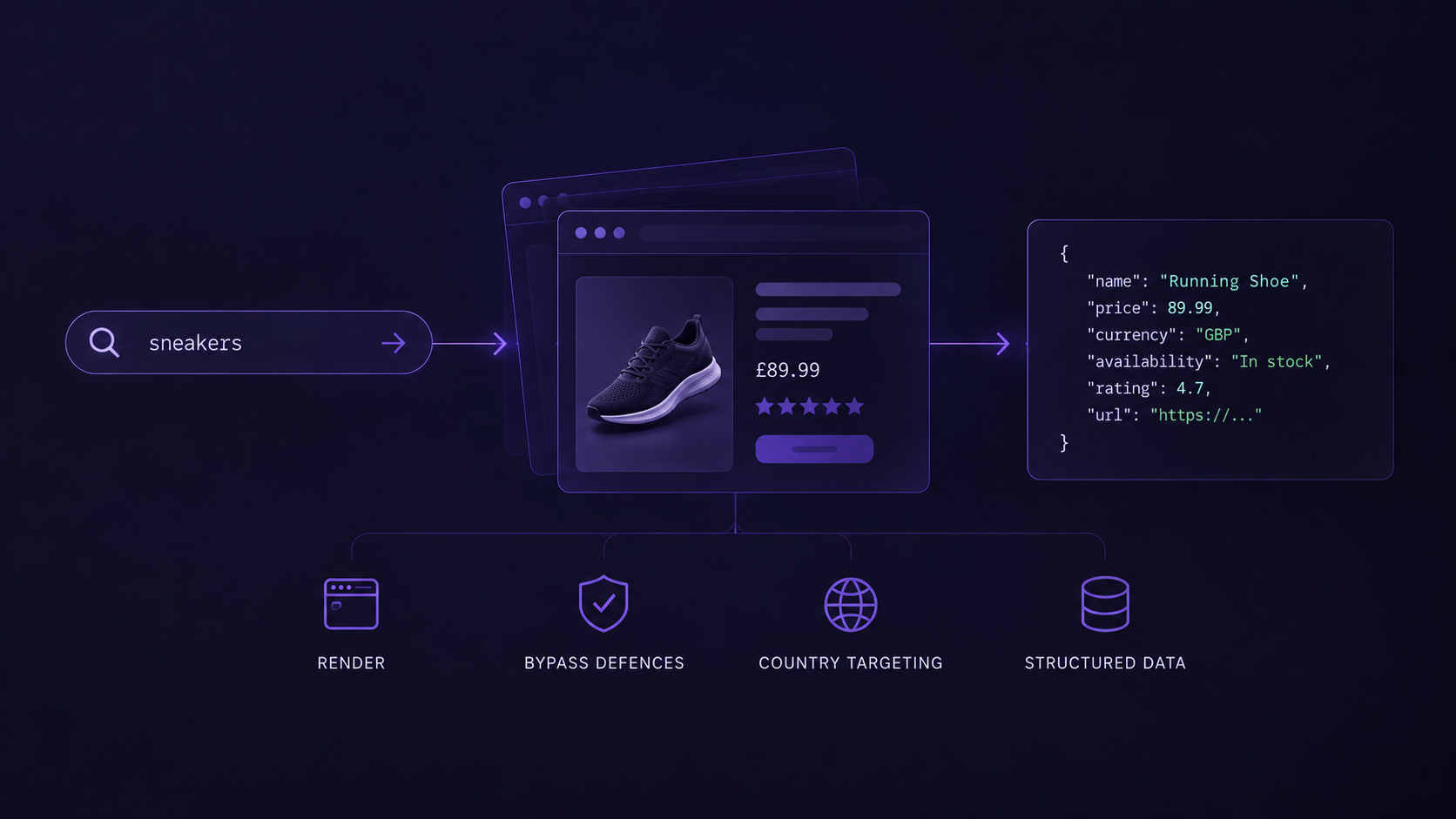
What sits between finding a page and holding data an AI system can use: access, extraction, entity discovery, research and continuous monitoring.

Guides, comparisons and hard-won lessons on web scraping, AI agents, pricing and MAP, the digital shelf and data quality — written by the team that has run web data in production since 2012.
What sits between finding a page and holding data an AI system can use: access, extraction, entity discovery, research and continuous monitoring.
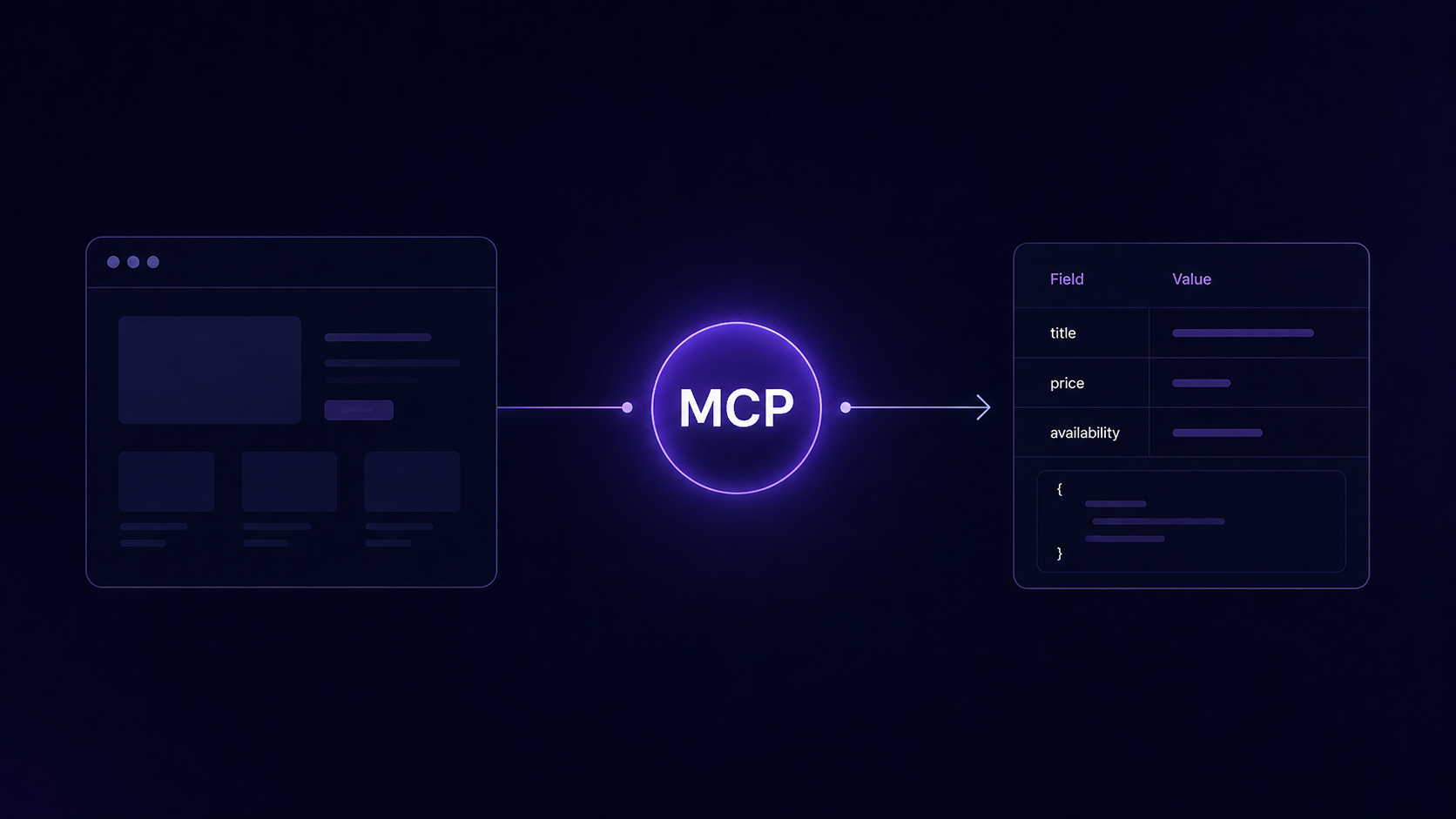
Fourteen years of extraction from the web’s most defended sites, now behind one MCP endpoint. The first 10,000 successful calls are free.
Dictating resale prices is a hardcore restriction in Europe, but RRP monitoring stays legal. Five compliant ways to act on European price data.
Three reading paths through the questions we are asked most.
Filter by topic or search. Newest first.
What sits between finding a page and holding data an AI system can use: access, extraction, entity discovery, research and continuous monitoring.
Dictating resale prices is a hardcore restriction in Europe, but RRP monitoring stays legal. Five compliant ways to act on European price data.
Governance, protected-site performance and who owns the pipeline decide most evaluations. Seven platforms, and where each stops being the right fit.
A local browser, markdown conversion or a hosted scraping engine: what each MCP is built for, and why output shape sets the cost of agent workloads.
When to add proxies and APIs, when to scale, and when to hand the whole pipeline to a managed service.
Fourteen years of extraction from the web’s most defended sites, now behind one MCP endpoint. The first 10,000 successful calls are free.
The best MAP monitoring tools, grouped by what each does best, from turnkey enforcement to evidence-backed in-house compliance.
Trial, Standard, Professional and Advanced: who each suits, the signals to move up a tier, and where Aperture fits.
How US brands automate MAP enforcement with timestamped workflows that protect margins and keep retail partners on side.
MAP enforcement is legal in the US but restricted in the EU and UK. What brands can do in each region, and how to monitor it.
Raw scraped data is rarely safe to train on. What model-ready web data means and how to get it for fine-tuning, RAG and evaluation.
Web scraping tools grouped by the job they do, from open-source libraries to managed data services, with guidance on build versus buy.
Coverage, completeness, schema drift, freshness and AI-readiness checks every data team should run on extracted web data.
The formula, physical versus digital share of shelf, the supporting metrics, and how to track it reliably across retailers.
The metrics clothing brands should track across retailers, the common monitoring failures, and a review workflow that scales.
AI-assisted extraction, browser-based scraping, API collection, managed scraping, product matching and data validation.
How web scraping, pricing intelligence software and AI pricing tools help teams monitor competitor prices and optimise strategy.
How price intelligence software and competitor price monitoring tools help ecommerce teams track market changes.
How brands use web data to monitor pricing, availability and product visibility across the digital shelf.
How AI helps pricing and digital shelf teams turn large volumes of competitor data into decisions.
Why maintaining scrapers gets costly and unreliable at scale, and what teams switch to.
Using web data to monitor competitors’ pricing, products, SEO and customer feedback.
Building a price monitoring strategy with real-time visibility into competitor prices, promotions and stock.
Crawling versus scraping: how crawlers discover URLs, how extractors pull structured data, and how to do both efficiently and compliantly.
How data visualisation has changed, why clarity matters, and how to turn complex data into insight.
BI explains present performance, analytics looks ahead, and both depend on high-quality data.
Pull live web data into Google Sheets with Import.io so your spreadsheet stays current without code.
Why unstructured web data now dominates, and how teams turn it into analysis-ready records.
The modern stack for collecting, storing and delivering external web data, and where managed services fit.
How brands win across discover, consider and decide through search visibility, content, reviews, pricing and availability.
Extracting structured data from sites with no API, using no-code tools and managed services, compliantly and at scale.
What an image URL is and how teams use visual data for AI, ecommerce and analytics.
Public web data is powerful only when it is structured and governed. How to get it there.
What data is, its types and uses, and why it matters to business and society.
How web scraping as a service works, why teams use it, and what to look for in a provider.
Harvesting collects web data; mining analyses it. How the two fit together.
Monitoring Amazon prices, availability and new products with Import.io.
The advantages and limits of building scrapers in Python.
From historical maps to interactive visualisations: how great data stories are told.
How web data integration makes analysis quicker, more accurate and more reliable.
Volume alone doesn’t create understanding. How visualisation makes information clear and actionable.
The web as the largest, fastest-changing data source, and how teams integrate it into operations.
How analysts source the right datasets efficiently and safely, and the challenges to plan for.
Machine learning improved forecasting, matching and anomaly detection. The data layer underneath decides whether it works.
How pricing intelligence, AI and managed data delivery are reshaping research workflows.
How automated extraction works, where businesses use it, and why many teams move to managed platforms.
Turning unstructured news coverage into structured, usable data.
What to consider to keep web scraping lawful and within a site’s rules.
How gathering data from many sources into one view helps organisations decide faster.
A plain introduction to data and why its collection and analysis matter.
Why consistent formats, units and values are what make big data usable.
Capturing image URLs from web pages for content audits, catalogues and visual analysis.
The main ways to get data out of a website, from copy-paste to APIs and extraction platforms.
Why consistent price perception matters, and how to act on pricing irregularities faster.
Shoppers and AI assistants compare your brand with whatever sits beside it. Where it happens and how to monitor it.
Why product page information is one of the biggest influences on purchase decisions.
How platforms, consultancies and agencies use digital shelf data for dashboards, advice and white-label products.
A customer’s scrapers missed fields on nearly 60% of product records. Here is what changed with Import.io.
How to collect product, price and availability data from any ecommerce site.
Why teams collect reviews, where they come from, and the operational challenges of doing it reliably.
No posts match. Try a shorter search, or look it up in the glossary.
Reference material that goes deeper than a post.