
Best Price Intelligence Tools in 2026
Import.io Aperture is our top pick for price monitoring in 2026.
We rank it first for retailers and brands that need reliable competitor prices, availability and MAP compliance across many retailers, with every product matched to their own catalogue and evidence attached. If you already have clean data and need pricing rules, look at Pricefx or Competera. For a small catalogue, Prisync is the simplest start.
Import.io publishes this guide and makes Aperture. Our ranking is an editorial judgment based on each vendor's official documentation, reviewed on 30 September 2026. It is not an independent benchmark.
Key takeaways
The short version.
Price intelligence tools track competitor prices, promotions, availability and assortment across retailers and marketplaces. The right one depends on your catalogue size, how accurate product matching must be, and whether you need data or decisions.
Import.io Aperture leads for monitoring at scale: daily capture, products matched to your catalogue, MAP and availability in one view.
Price monitoring and price optimisation are different. Most teams need reliable monitoring before optimisation pays off.
Product matching accuracy decides data quality more than any dashboard feature. Ask every vendor how they match and how they prove it.
For MAP enforcement, check that the tool captures dated evidence per seller, not just a price.
Comparison
Best price intelligence tools at a glance.
Seven tools, grouped by the job they do. Import.io Aperture is our overall recommendation for monitoring; the remaining entries are comparison options, not a ranked benchmark.
| Tool | Type | Data collection | Digital shelf | Best for | Watch out for |
|---|---|---|---|---|---|
| Import.io ApertureOUR PICK | Monitoring MAP | Built in and managed, captured daily | Yes | Pricing, category and brand teams tracking many SKUs across many retailers | Built for monitoring and data quality, not automated repricing |
| Pricefx | Optimisation | Requires external data input | Limited | B2B enterprises with a mature pricing strategy and existing data infrastructure | Depends on already-structured data sources |
| Prisync | Monitoring | Built in, basic | No | Small ecommerce teams doing basic competitor monitoring | Harder to scale across many retailers with complex matching |
| Competera | Optimisation | Partial, relies on partner data | Limited | Retailers automating pricing decisions | Less focus on raw data acquisition and structuring |
| Price2Spy | Monitoring MAP | Built in, configurable | No | Brands needing MAP compliance and retailer monitoring | Data consistency depends heavily on configuration |
| Skuuudle | Monitoring | Built in | Partial | Retailers focused on competitive pricing visibility | Less adaptable for non-retail or highly customised use cases |
| Intelligence Node | Monitoring | Built in, large scale | Yes | Global enterprises with large catalogues across regions | More complex to implement and manage |
Choose your route
Which type of tool do you need?
Most buying mistakes come from comparing a monitoring tool with an optimisation tool. Answer two questions first.
Do you already have clean, matched competitor data?
Do you enforce a minimum advertised price?
Methodology
How we compared the tools.
We reviewed each vendor's official product pages and documentation on 30 September 2026 against four questions: does it collect data itself, does it cover the digital shelf, does it recommend prices, and does it support MAP monitoring. We did not run a controlled benchmark.
| Tool | Collects data itself | Digital shelf | Price recommendations | MAP monitoring |
|---|---|---|---|---|
| Import.io Aperture | ✓ | ✓ | — | ✓ |
| Pricefx | — | ◐ | ✓ | — |
| Prisync | ✓ | — | — | — |
| Competera | ◐ | ◐ | ✓ | — |
| Price2Spy | ✓ | — | — | ✓ |
| Skuuudle | ✓ | ◐ | — | — |
| Intelligence Node | ✓ | ✓ | — | — |
1 · Our pick
Import.io Aperture
Most price intelligence tools collect prices. The hard part is making them comparable: the same product matched across every retailer, checked daily, with proof of what the shopper saw.
- What it isPricing, assortment and MAP intelligence from Import.io, built on the web data engine the company has run in production since 2012.
- StrengthProducts matched to your catalogue across retailers and marketplaces, captured daily, with evidence attached to each price.
- Watch outBuilt for monitoring and data quality, not automated repricing. Pair it with an optimisation tool if you need pricing rules.
- Best forPricing, category and brand teams tracking many SKUs across many retailers, including MAP compliance.
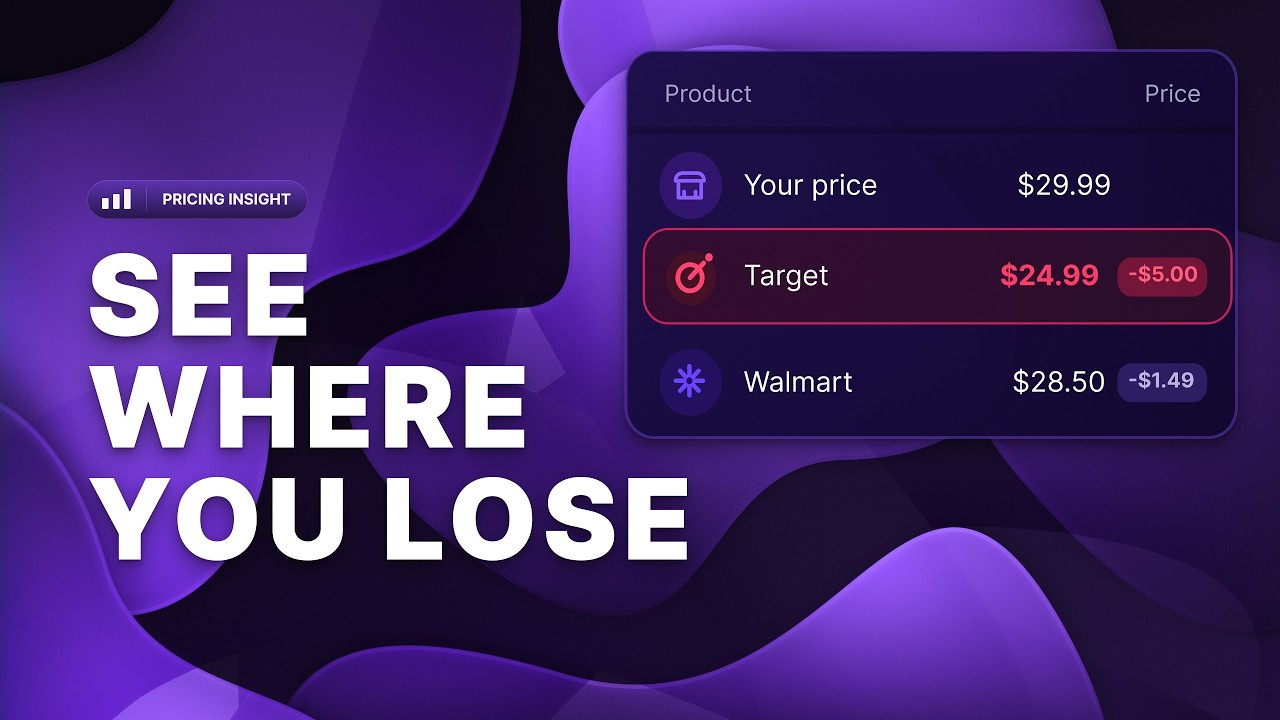 Watch · ApertureSee where you loseHow Aperture shows where competitors undercut your price. Opens on YouTube ↗

| Retailer | Price | vs MAP | Stock | Captured |
|---|---|---|---|---|
| Retailer A | $38.99 | At MAP | In stock | 06:12 UTC |
| Retailer B | $34.49 | −11.5% | In stock | 06:14 UTC |
| Marketplace C | $35.10 | −10.0% | 3P seller | 06:15 UTC |
| Retailer D | $38.99 | At MAP | Out of stock | 06:18 UTC |
| Retailer E | $39.49 | Above | In stock | 06:20 UTC |
See your own shelf.
Send us 50 SKUs and your retailer list. We'll show you matched prices, availability and MAP status for your catalogue.
Comparison options
The other six tools.
Each entry is based on the vendor's own documentation. Where we have published a detailed comparison, it's linked.
Pricefx
Optimisation- Strength
- Advanced pricing optimisation and modelling.
- Watch out
- Relies on already-structured data inputs.
- Best for
- Enterprises with established data infrastructure and dedicated pricing teams.
Prisync
Monitoring- Strength
- Simple setup and an easy-to-use interface.
- Watch out
- Harder to manage across many retailers with complex product matching.
- Best for
- Small ecommerce teams that need basic competitor monitoring.
Competera
Optimisation- Strength
- AI-driven pricing recommendations and automation.
- Watch out
- Less focus on raw data acquisition and structuring.
- Best for
- Retailers looking to automate pricing decisions at scale.
Price2Spy
Monitoring- Strength
- Flexible monitoring and detailed alerting; often used for MAP tracking.
- Watch out
- Data consistency depends heavily on configuration.
- Best for
- Brands that need pricing compliance and monitoring across retailers.
Skuuudle
Monitoring- Strength
- Retail-focused insights and benchmarking.
- Watch out
- Less adaptable for non-retail or highly customised use cases.
- Best for
- Retailers focused on competitive pricing visibility.
Intelligence Node
Monitoring- Strength
- Large-scale data coverage and product matching.
- Watch out
- More complex to implement and manage.
- Best for
- Global enterprises with large catalogues across regions.
Before you buy
Where price intelligence tools struggle.
These problems appear once a team moves beyond tracking a few competitors. Ask every vendor how they handle each one.
 Your catalogue
 Marketplace listing
The same product is named, packed and described differently on every retailer.
Raw captures need cleaning and structure before anyone can trust a comparison.
Large catalogues change faster than some tools refresh them.
Most price changes don't matter. The tool should surface the ones that do.
Many tools work for a few hundred SKUs and struggle at tens of thousands across markets.
FAQ
Price intelligence questions.
Short answers to what buyers ask most. Each links to a deeper guide.
What is the best price intelligence tool in 2026?
For monitoring competitor prices, availability and MAP across many retailers, our pick is Import.io Aperture. For price optimisation on top of clean data, look at Pricefx or Competera. For a small catalogue, Prisync is the simplest start.
What is the difference between price monitoring and price optimisation?
Monitoring collects and matches competitor prices, promotions and availability. Optimisation uses that data, plus your own costs and demand, to recommend prices. Optimisation is only as good as the monitoring data feeding it.
Which price intelligence tool is best for MAP monitoring?
Choose a tool that captures dated evidence per seller, not just a price. In this comparison, Import.io Aperture and Price2Spy document MAP monitoring. See our MAP monitoring software guide.
What are pricing intelligence tools?
Software that collects, structures and analyses competitor pricing data from websites, marketplaces and digital shelves. How pricing intelligence tools work.
Why is product matching important for pricing intelligence?
If the same product isn't matched correctly across retailers, every price comparison built on it is wrong. Matching accuracy matters more than dashboard features.
How does pricing intelligence connect to digital shelf analytics?
Price is one signal on the digital shelf, alongside availability, search rank and content. Tools that capture them together show why a price change did or didn't move sales. Digital shelf analytics.
Why do teams move from DIY scraping to managed pricing data?
Maintaining scrapers across dozens of retailers, handling blocks and re-matching products becomes a full-time job. Build vs buy compared.
Stop cleaning pricing data. Start acting on it.
Send us 50 SKUs and your retailer list. We'll show you matched prices, availability and MAP status for your own catalogue.