
What Are Pricing Intelligence Tools and How Do They Work in 2026

Pricing teams are under pressure to keep up with prices that change by channel, seller, region, and sometimes by the hour.
For large ecommerce catalogs, checking competitor prices manually becomes slow, inconsistent, and easy to get wrong. Pricing intelligence tools help teams replace one-off checks and spreadsheet updates with a repeatable system for collecting competitor pricing data, matching products, and spotting changes quickly enough to act.
Ready to compare platforms? See our guide to the best pricing intelligence tools in 2026.
What Are Pricing Intelligence Tools?
Pricing intelligence tools help companies see how their products are priced across ecommerce sites, marketplaces, retailers, and digital shelves. Instead of checking competitor pages one at a time, teams can monitor price changes, promotions, availability, shipping terms, and seller activity in one place.
The best tools also solve a harder problem: making sure the comparisons are fair. A 12-pack should not be compared with a single unit. A marketplace seller promotion should not be treated the same as a retailer-wide price drop. That product matching and data cleanup work is what separates pricing intelligence from simple price tracking.
Why Pricing Intelligence Tools Matter in 2026
Pricing decisions are harder when every channel tells a slightly different story. A brand might see one price on Amazon, another on Walmart, another through a regional retailer, and several more from third-party sellers. Without a reliable way to monitor those changes, teams are often working from stale screenshots, partial exports, or manually updated spreadsheets.
Pricing intelligence gives teams a clearer view of the market before they change prices, launch promotions, or investigate margin pressure.
Common Pricing Intelligence Challenges and How Modern Tools Solve Them
For most pricing teams, collecting prices is only part of the job. The harder part is trusting the data once it arrives. Product pages change, marketplaces display different sellers, bundle sizes vary, and promotions may only apply in certain regions or time windows.
Modern pricing intelligence tools help by standardizing messy web data, checking product matches, refreshing data on a set schedule, and flagging changes that actually matter. That saves teams from spending hours cleaning exports before they can answer basic questions like, “Are we overpriced?” or “Did a competitor just undercut us?”
How Pricing Intelligence Tools Work
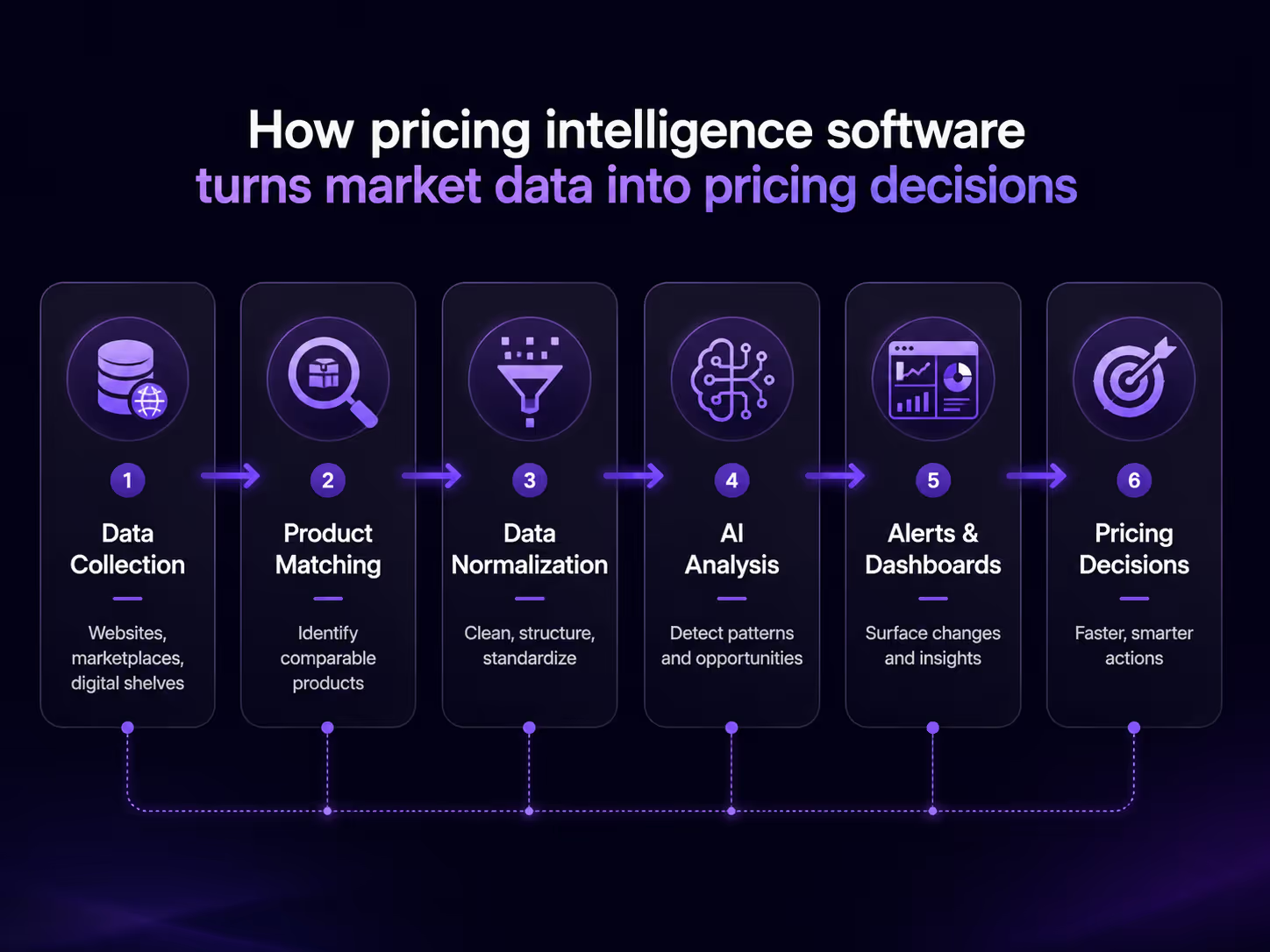
Pricing intelligence usually follows the same path: gather the data, clean it, match products correctly, then turn the results into alerts, reports, or pricing recommendations. Each step matters because a small data issue early on can lead to the wrong pricing decision later.
1. Data Collection with Web Scraping
Pricing intelligence tools use web scraping to collect data from ecommerce websites, marketplaces, and competitor product pages.
This ensures continuous access to up-to-date pricing and product information.
2. Data Structuring and Normalization
Product normalization is often where pricing intelligence succeeds or fails. A small difference in size, bundle configuration, seller, or product variant can lead to inaccurate comparisons if the system cannot match products correctly.
Raw web data is often inconsistent and unstructured. Pricing intelligence software standardizes this data by:
- Matching identical products across retailers
- Cleaning inconsistent formats
- Organizing data into structured datasets
This step is critical for accurate comparisons.
3. Data Analysis and Monitoring
Once structured, data is analyzed to identify:
- Price changes
- Competitor pricing strategies
- Promotional activity
- Market trends
Many competitor price monitoring tools provide dashboards and alerts to highlight key changes.
4. AI-Driven Insights
AI is most useful when pricing teams are dealing with more data than they can reasonably review by hand. It can help detect unusual price movements, surface likely product matches, group similar competitor behavior, and flag changes that deserve attention. The value is less about replacing pricing teams and more about helping them find the signal in thousands of price changes.
5. Action and Optimization
The final step is turning insights into action. Businesses use pricing intelligence tools to:
- Adjust pricing strategies
- Optimize margins
- Improve product positioning
- Respond to competitor activity
Benefits of Pricing Intelligence Tools
The main benefit of pricing intelligence is confidence. Teams can see when competitors change prices, understand whether the change is meaningful, and respond without waiting for someone to manually check dozens of product pages.
For ecommerce and retail teams, that can mean faster reactions to promotions, fewer pricing blind spots, better margin protection, and less time spent cleaning spreadsheets.
Key Features of Modern Pricing Intelligence Software
Not all pricing intelligence tools are the same. In 2026, leading platforms offer:
Real-Time Data Collection
Continuous web scraping ensures data is always up to date.
Product Matching and Data Accuracy
Accurate matching across retailers is essential for reliable insights.
Scalability
Ability to track thousands of products across multiple markets.
Integration with Analytics Workflows
Data can be used alongside digital shelf analytics and other business systems.
AI-Powered Insights
Advanced tools use AI to improve analysis and reduce manual work.
Common Pricing Intelligence Mistakes to Avoid
Even with the right software, pricing intelligence programs can fall short when teams rely on incomplete or inaccurate data. Avoiding these mistakes helps businesses get more reliable insights from competitor pricing data.
1. Comparing the wrong products
A competitor’s product may look similar but differ in size, pack count, seller, region, shipping terms, or availability. Without accurate product matching, teams can make decisions based on misleading comparisons.
2. Tracking prices too infrequently
In fast-moving ecommerce categories, prices can change multiple times per day. Infrequent tracking can cause teams to miss short-term promotions, marketplace shifts, or sudden competitor moves.
3. Ignoring availability and promotions
Price alone does not tell the full story. A lower price may be tied to an out-of-stock product, a temporary promotion, a specific seller, or a limited regional offer.
4. Relying on manual spreadsheets
Manual tracking becomes difficult as product catalogs, regions, and competitors grow. It also increases the risk of errors, delays, and inconsistent reporting.
5. Treating pricing intelligence as a one-time report
Pricing intelligence works best as an ongoing system. Teams need continuous monitoring, alerts, and repeatable workflows to turn pricing data into better decisions.
Pricing Intelligence Tools and Digital Shelf Analytics
Pricing is only one part of the broader ecommerce landscape.
Many businesses combine pricing intelligence tools with digital shelf analytics to gain a more complete view of performance.
This includes tracking:
- Product visibility
- Availability
- Content consistency
- Customer reviews
By integrating pricing data with digital shelf insights, brands can better understand how pricing impacts overall performance.
Want the full framework? Download our free guide to building a pricing and digital shelf intelligence workflow your team can trust.
How We Make Pricing Intelligence Work at Scale
Most pricing intelligence tools focus on collecting data. The challenge is making that data usable.
Using platforms like Import.io Aperture, teams can:
- Extract pricing data from multiple ecommerce sources
- Structure and normalize raw web data automatically
- Ensure consistency across products and retailers
- Integrate pricing data into analytics workflows
- Support AI pricing tools with clean, high-quality datasets
Pricing intelligence tools are only as effective as the data behind them. By focusing on data quality and structure, businesses can move from simple monitoring to confident, data-driven decisions.

Pricing Intelligence Trends to Watch in 2026
In 2026, pricing intelligence is becoming less about collecting more data and more about making pricing data easier to trust. Teams want cleaner product matches, faster refreshes, and alerts that separate routine price movement from changes that need action.
The biggest improvements are happening in AI-assisted product matching, near real-time monitoring, automated alerts, and tighter connections between pricing data and digital shelf analytics.
Why Pricing Intelligence Tools Are a Competitive Advantage
Pricing intelligence becomes most valuable when it is connected to action. Teams need more than raw competitor prices. They need alerts, context, and workflows that help them respond quickly without relying on manual spreadsheet reviews.
In 2026, pricing intelligence tools are no longer optional. They are a core part of ecommerce strategy.
By combining:
- Web scraping
- Pricing intelligence software
- AI pricing tools
- Competitor price monitoring tools
Businesses can:
- Respond quickly to market changes
- Maintain competitive pricing
- Improve margins
- Reduce manual effort
- Make more informed decisions
Conclusion
Pricing intelligence tools are now a practical requirement for teams managing competitive ecommerce catalogs. Manual checks and spreadsheet-based tracking may still work for a small set of products, but they break down quickly as channels, sellers, regions, and promotions multiply.
The strongest pricing programs depend on clean competitor data, accurate product matching, reliable collection, and alerts that help teams act before price changes turn into lost sales or margin pressure.
Ready to choose a tool? See our ranked guide to the best pricing intelligence tools in 2026.
