
How to Create a Competitive Price Monitoring Strategy
.avif)
How to Build a Competitive Price Monitoring Strategy in 2026
In real estate, it’s location, location, location.
In e-commerce, it’s still price, price, price, but now with a twist.
In 2026, pricing isn’t just about being cheaper. It’s about being smarter, faster, and more responsive than the market.
Consumers compare instantly. They check marketplaces, search engines, deal aggregators, and competitor sites within seconds. Dynamic pricing is now the norm. Promotions change daily. Stock levels fluctuate hourly.
If you’re not monitoring the market in real time, you’re reacting too late.
Why Competitive Price Monitoring Still Matters
Online shoppers don’t just compare, they expect transparency.
When your price is out of line with the market, sales drop immediately. When competitors run promotions and you don’t respond, margins shrink or inventory stalls.
Modern price monitoring gives you visibility into the 3 Ps:
- Price – What competitors are charging
- Product – What they’re stocking or dropping
- Promotions – Bundles, discounts, flash sales
It also helps you:
- Detect MAP violations
- Identify undercutting competitors
- Spot assortment gaps
- Track stock availability
- Understand your market positioning
In short, it turns guesswork into strategy.
Price Optimization in 2026
Competitive monitoring is just one part of price optimization, but it’s a critical one.
Your pricing strategy should combine:
- Internal data (sales history, margins, inventory levels)
- External data (competitor prices, promotions, stock, seasonality)
- Market signals (demand shifts, events, trends)
Together, this gives you a 360° view of your pricing landscape.
Major retailers adjust prices dozens of times per day. Airlines and travel platforms update in real time. Even mid-sized e-commerce brands now operate with dynamic pricing models.
The companies that win aren’t guessing, they’re monitoring continuously.
How to Create a Competitive Price Monitoring Strategy
You don’t need to monitor everything. You need to monitor intelligently.
Here’s a streamlined approach for 2026.
1. Identify the Right Competitors
Focus on direct competitors, the brands customers compare you with in search results and marketplaces.
Look at:
- Search rankings
- Marketplace listings
- Industry tools and reports
- Paid search competitors
Prioritize the businesses that overlap with your key SKUs.
2. Define Your Competitive Assortment
Apply the 80/20 rule.
Most companies generate the majority of revenue from a small portion of products. Monitor:
- Best sellers
- High-margin items
- High-visibility SKUs
- Strategic loss leaders
Organize them clearly by category and SKU for clean comparisons.
3. Set the Right Monitoring Frequency
In fast-moving industries, daily monitoring may not be enough.
Consider:
- Hourly monitoring for high-velocity products
- Daily monitoring for core inventory
- Weekly monitoring for stable items
The fresher the data, the faster you can respond.
4. Capture More Than Just Price
Modern pricing strategy requires context.
Track:
- Stock availability
- Shipping costs
- Promotions and bundles
- Review counts and ratings
- Assortment changes
Price alone doesn’t tell the whole story.
From Scraping to Strategic Intelligence
Historically, price monitoring meant building scrapers, managing infrastructure, and stitching together spreadsheets.
That approach no longer scales.
In 2026, businesses need structured, reliable, continuously refreshed market data, without engineering overhead.
This is where Import.io Aperture changes the game.
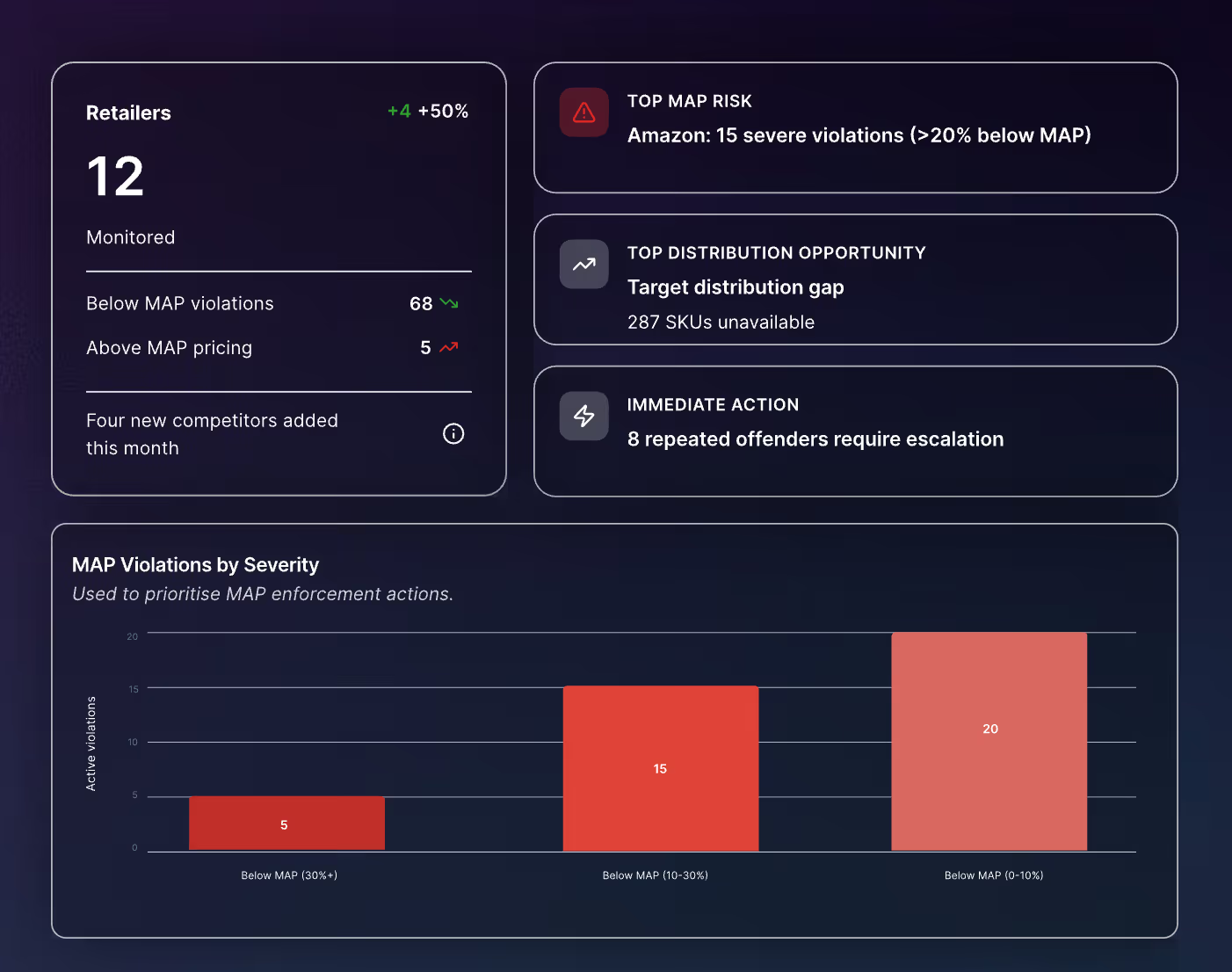
Import.io Aperture is designed specifically for competitive pricing intelligence. Instead of manually extracting URLs or maintaining scripts, Aperture delivers:
- Structured competitor price tracking
- Assortment and stock monitoring
- Change detection and alerts
- Clean, analytics-ready datasets
- Scalable coverage across multiple competitors
It moves price monitoring from reactive scraping to proactive intelligence.
For teams that want to see how it works in practice, you can try the Import.io Aperture demo and explore the platform yourself here.
In just a few steps, you can set up an account, monitor competitor pricing, and start building your own pricing intelligence workflows.
Need a clearer pricing monitoring plan? Download the free guide to see which market signals to track and how to turn them into action.
The Competitive Advantage
Only a minority of companies systematically monitor competitor pricing, and that’s a major opportunity.
If your competitors are adjusting dynamically and you’re reviewing prices monthly, you’re behind.
If they’re reacting within hours and you’re reacting within days, you’re leaking margin.
A structured price monitoring strategy allows you to:
- Protect margins
- Avoid unnecessary undercutting
- Identify pricing gaps
- Respond instantly to promotions
- Maintain strategic positioning
It’s not about racing to the bottom. It’s about pricing with confidence.
Monitor. Adjust. Win.
Pricing isn’t static. It never has been, but in 2026, it’s fully fluid.
Prices rise. Prices drop. Inventory shifts. Promotions appear overnight.
Ignoring competitor movement means losing visibility into your market.
Modern price monitoring, powered by tools like Import.io Aperture, ensures you’re not guessing. You’re operating with live competitive intelligence.
Because in e-commerce today, pricing isn’t just a lever.
It’s a strategy.
Monitor competitor prices with Aperture.
Ready to choose a tool? See our ranked guide to the best pricing intelligence tools in 2026.
